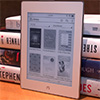
 All right, I’ll say it. E-readers are the best. I actually prefer to read books on an electronic device now than to have to carry around big slabs of dead trees. What’s more, if I hear one more person say, “But I like the feel and the smell of the paper,” I’ll scream. There are two distinct types of people in the world. Some of them think women’s panties are for wearing, and the others … catch my drift? But to me, the advantages of an e-reader far outweigh any nostalgic notions of paper books (except, perhaps, longevity).
I’d been in the mood for reading some new books, so I did a little research and I found about four that I’d be interested in reading. I wasn’t so sold that I wanted to shell out money for them, though. So you know what? I checked them out from the library. Yes, on the e-reader. That’s a thing. Now I walk around with all four of them in my jacket pocket. When I finish one I can pick up the next one, just like that. I can read them in the dark, no flashlight necessary. And to repeat, I did not steal them, I checked them out from my local library and thus supported the authors.
 This post is the second in a series of thoughts on my recent experiences as a journalist “embedded” within a tech-centric public relations agency. You can
  For as long as I’ve been a professional writer (almost 20 years now), and with all the writers I’ve known and spoken with, one thing that surprises me is that I don’t recall ever having a conversation with another writer about writing. I mean the writing itself.
 I just love this.